

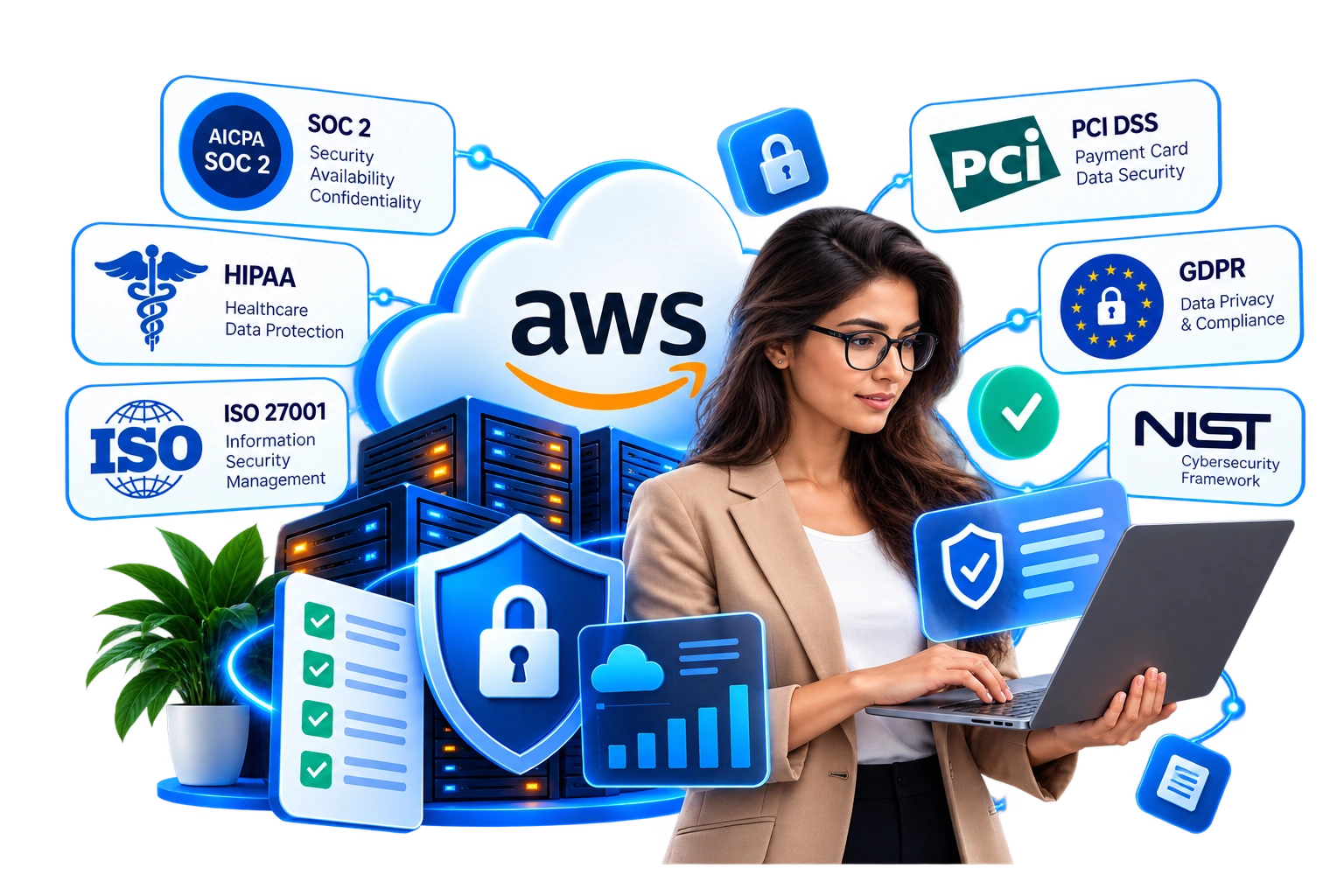
Being on AWS doesn’t make you compliant. But it gives you the infrastructure to get there if you understand how the pieces fit. Many organizations assume that simply moving workloads to the cloud solves their compliance obligations. The reality is different.
Security audits, customer data requests, and vendor assessments start appearing immediately once sensitive workloads are hosted on AWS.
AWS for startups has taken a great leap in recent years, with 53% of SMBs now using AWS, according to Flexera’s 2025 State of the Cloud report. This rapid adoption shows how emerging companies are adopting cloud infrastructure to scale quickly while keeping compliance and security top of mind.
At Clustox, we’ve seen firsthand how quickly AWS compliance gaps emerge when businesses scale their cloud operations without a structured approach. Small misconfigurations or missing documentation can lead to costly delays during audits or expose sensitive customer data.
In this blog, you’ll learn:
- What AWS compliance really means and why it matters.
- A detailed overview of the top 7 AWS compliance standards.
- How to choose the right standard for your business.
What Is Amazon Web Services (AWS) Compliance & Why Does It Matter?
AWS Compliance is the set of rules, standards, and controls that businesses follow to secure workloads and data in AWS. It ensures cloud environments meet regulatory compliance, adhere to industry-specific standards, and protect sensitive customer and company information.
Why AWS Compliance Is Critical For Businesses?
- Prevents costly fines and legal risks with proper regulatory compliance.
- Builds trust with clients and partners through verified audit reports.
- Reduces risk of misconfigurations or data exposure in AWS development.
- Speeds up project approvals by aligning with relevant compliance standards.
- Strengthens operational integrity with solid security & compliance controls.
Teams that adopt practices like test-driven development (TDD) can catch configuration and code issues early, reducing the risk of misconfigurations that could break compliance requirements.
Keep in mind, AWS compliance is a shared responsibility. The AWS shared responsibility model clearly divides tasks: AWS secures the infrastructure, while businesses manage workloads, access, and maintain accurate compliance documentation.
Table of Contents
But even with this framework, it can be tricky to get everything right. Professional guidance in AWS development and consulting can help you stay on top of operational compliance and keep your cloud environment secure and audit-ready.
Top 7 AWS Compliance Standards You Shouldn’t Miss
Following AWS Compliance goes beyond securing infrastructure. You need to adopt the proper compliance standards to keep your customer data safe, comply with industry regulations, and avoid costly audit delays. Companies often assume that moving to the cloud is enough, but without a straightforward approach to operational compliance and data security standards, gaps quickly appear.
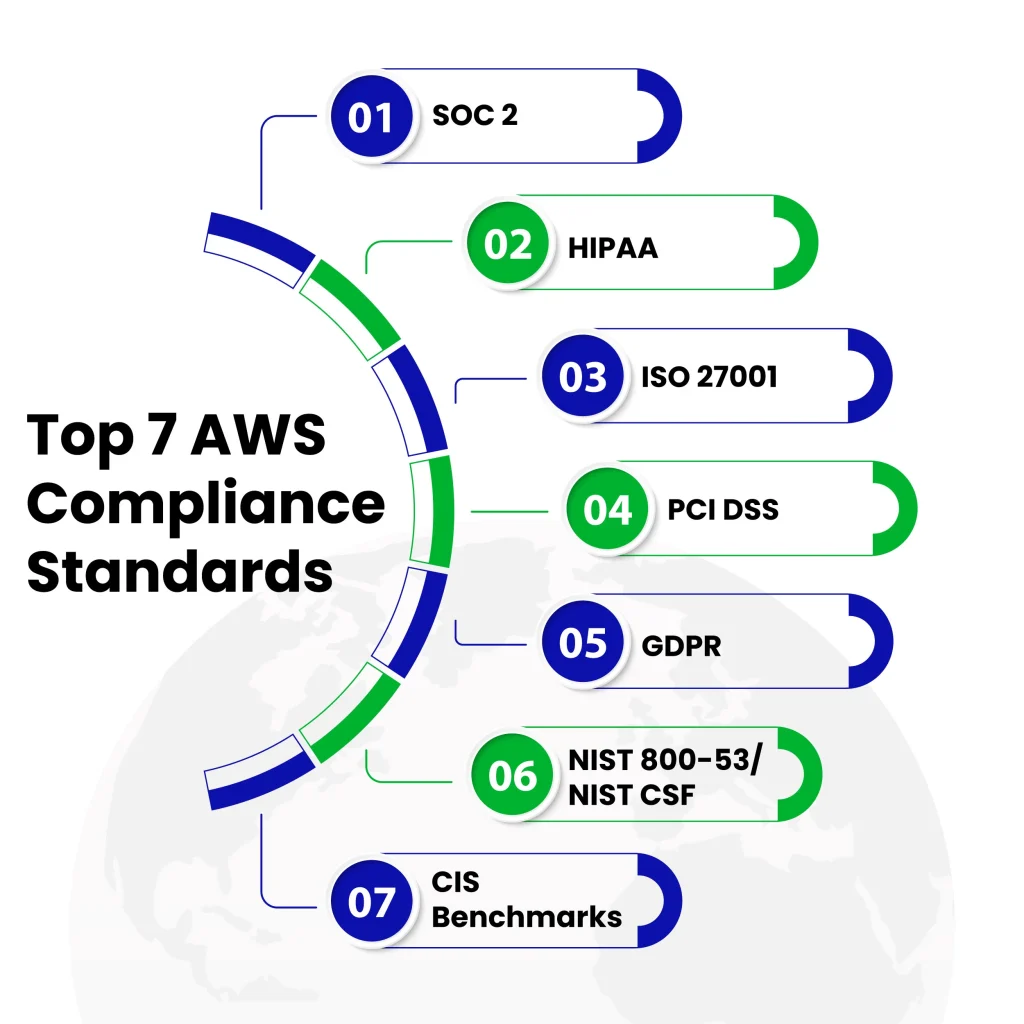
Below, we have covered the top 7 compliance standards in AWS that you must follow:
- SOC 2
- HIPAA
- ISO 27001
- PCI DSS
- GDPR
- NIST 800-53/NIST CSF
- CIS Benchmarks
For each standard, we’ll cover:
- What it is
- Who needs it
- How it maps to AWS
- Common pitfalls in its implementation and how to avoid them
So, let’s get started.
1. PCI DSS – Payment Card Industry Data Security Standard
PCI DSS focuses on protecting cardholder data for credit and debit card payments. It ensures that systems handling payment information follow strict security practices to prevent breaches.
Who Needs PCI DSS?
- Any workload that processes, stores, or transmits payment card data
- E‑commerce applications handling customer payments
- Payment gateways and financial service platforms
How Does PCI DSS Map to AWS?
AWS provides the tools and frameworks to help meet PCI DSS requirements. Using AWS Compliance Program certifications and AWS Artifact gives you access to audit-ready reports, making it easier to maintain compliance. AWS services support encryption, access control, and monitoring to safeguard cardholder data.
Common Mistakes In PCI DSS Implementation
- Storing cardholder data without proper encryption
- Misconfiguring access permissions for sensitive systems
- Relying solely on AWS security without configuring your applications
How To Avoid The Mistakes?
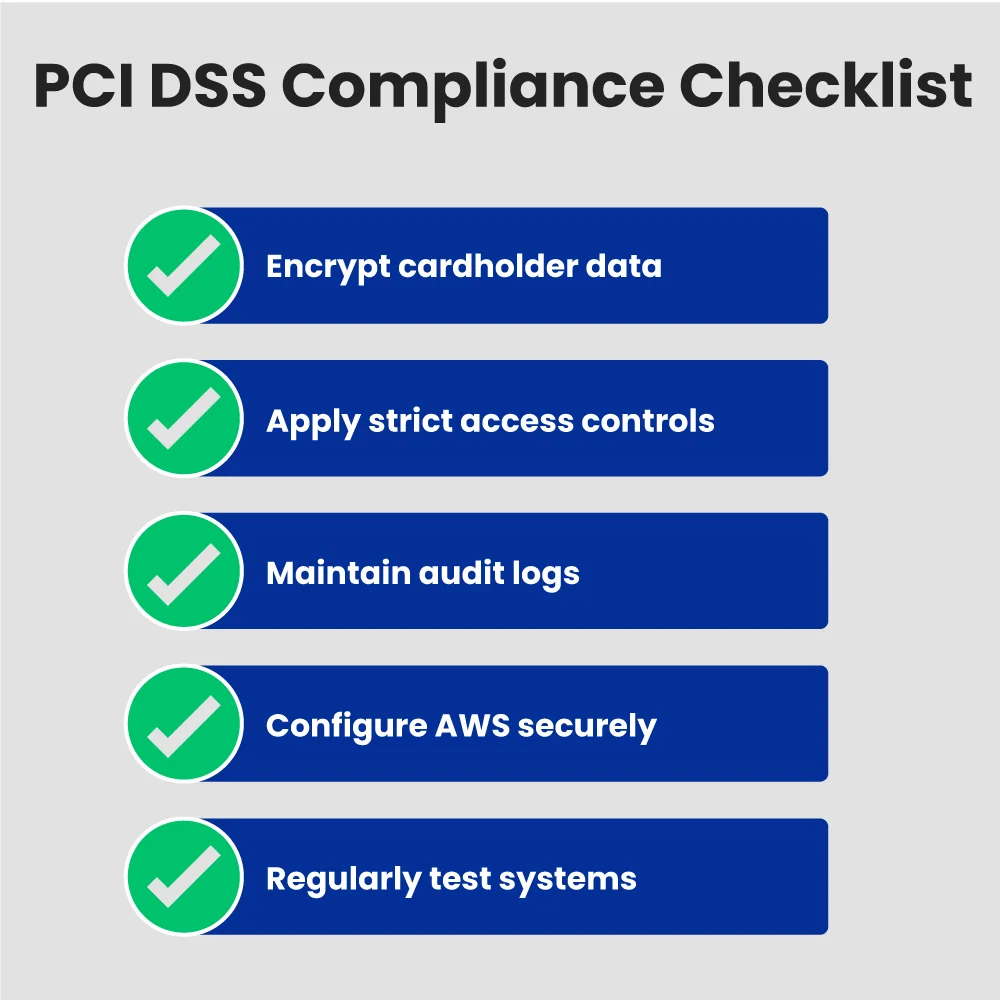
- Encrypt all stored and transmitted cardholder data
- Implement strict access policies and regular audits
- Use AWS compliance resources to monitor and validate your setup
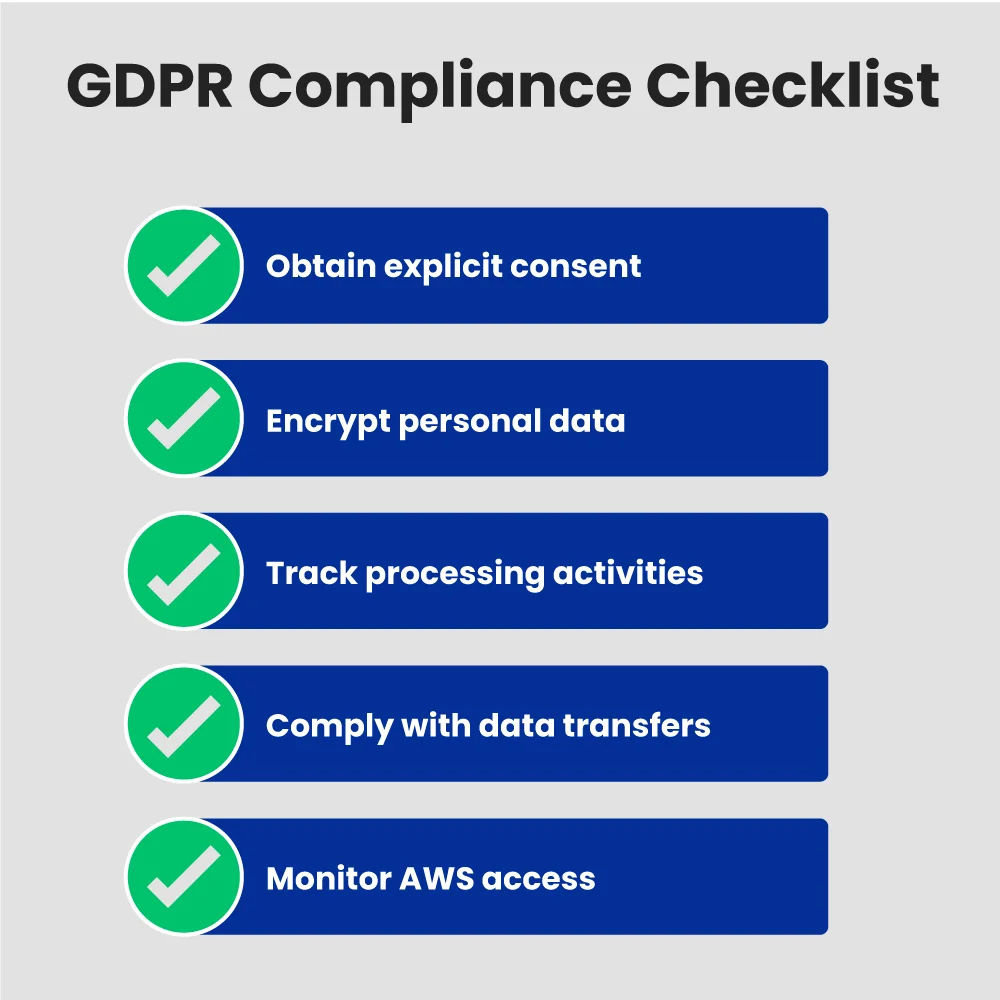
2. GDPR – General Data Protection Regulation
GDPR is a regulation that governs the privacy and protection of personal data of individuals in the EU/EEA. It sets clear rules on how organizations collect, process, and store personal data to maintain trust and avoid legal penalties.
Who Needs GDPR?
- SaaS platforms with EU users
- Customer-facing apps handling personal data
- Analytics platforms processing behavioral or profile information
How Does GDPR Map to AWS?
GDPR compliance relies on AWS to secure the infrastructure while you manage data and access controls. Tools like AWS Compliance Center and AWS Artifact help efficiently organize documentation and evidence.
Common Mistakes In GDPR Implementation
- Collecting or storing EU personal data without proper consent
- Misconfiguring AWS storage and access policies
- Overlooking audit requirements for cross-border data
How To Avoid The Mistakes?
- Implement explicit consent and data handling policies
- Use encryption and fine-grained access controls for encryption & data residency
- Maintain organized evidence using AWS compliance resources
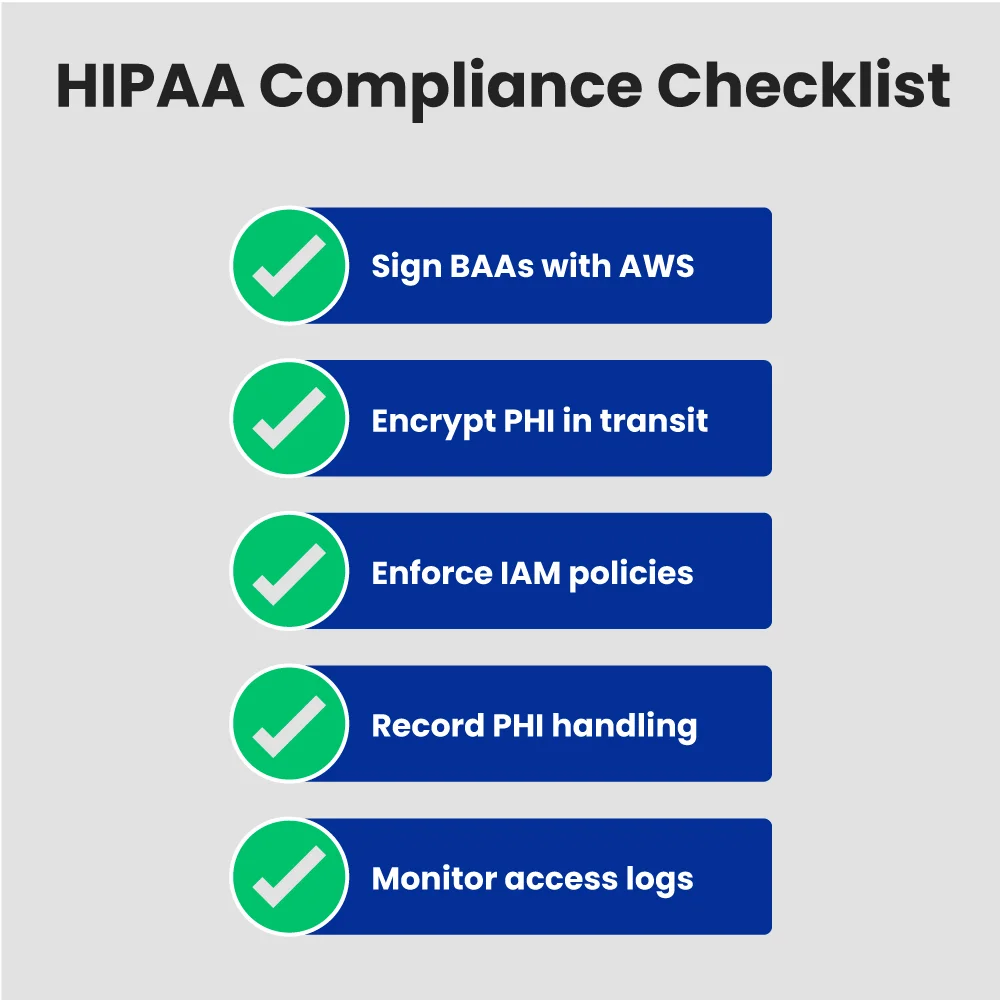
3. HIPAA/HITECH – Health Insurance Portability and Accountability Act
HIPAA/HITECH sets standards for safeguarding protected health information (PHI/ePHI). It ensures that healthcare and related services handle sensitive data securely while maintaining privacy and regulatory compliance.
Who Needs HIPAA/HITECH?
- Electronic Health Record (EHR) systems
- Health-tech applications storing PHI
- Telemedicine platforms and healthcare service providers
How Does HIPAA/HITECH Map to AWS?
AWS provides infrastructure to protect PHI, while you are responsible for configuring applications and data access. AWS Audit Manager and AWS Marketplace Compliance solutions help you collect and organize evidence to meet HIPAA compliance standards.
Common Mistakes In HIPAA/HITECH Implementation
- Assuming AWS infrastructure alone guarantees PHI security
- Incomplete documentation of protected health data workflows
- Failing to monitor access and activity logs regularly
How To Avoid The Mistakes?
- Maintain detailed records and compliance documentation for PHI handling
- Set strict access policies and monitor activity consistently
- Use automated tools for continuous audit readiness
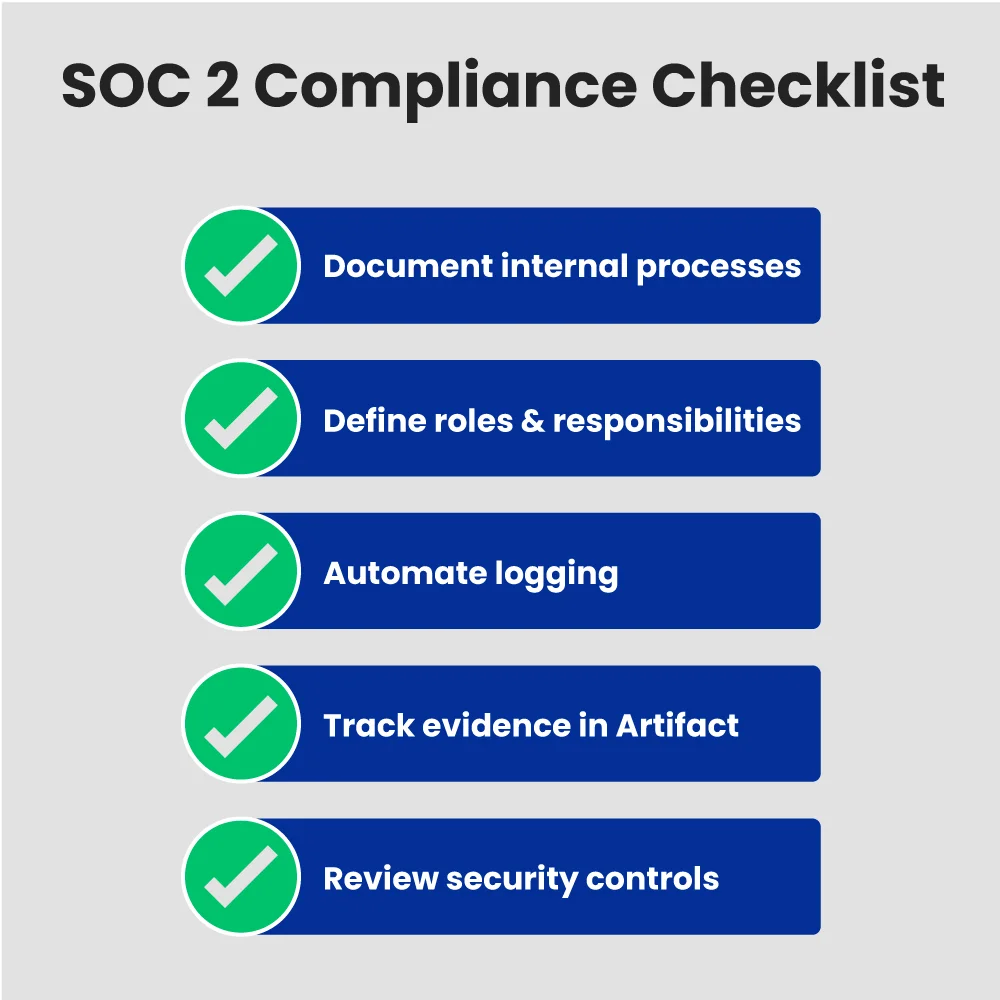
4. SOC 2 – System and Organization Controls 2
SOC 2 is an auditing standard for service organizations. It checks security, availability, processing integrity, confidentiality, and privacy.
Who Needs SOC 2?
- B2B SaaS providers managing enterprise data
- Teams handling sensitive customer information
- Organizations providing operational reliability to clients
How Does SOC 2 Map To AWS?
SOC 2 aligns with the AWS Shared Responsibility Model. The platform secures infrastructure while you handle applications and data, including AWS containers. Using AWS Artifact helps track evidence and maintain compliance efficiently. Using AWS Artifact helps track evidence and maintain compliance efficiently.
Common Mistakes In SOC 2 Implementation
- Missing documentation of internal processes
- Assuming AWS security alone covers compliance
- Irregular monitoring of system activity
How To Avoid The Mistakes?
- Keep clear compliance documentation.
- Follow the responsibilities laid out in the shared model
- Automate monitoring and evidence collection
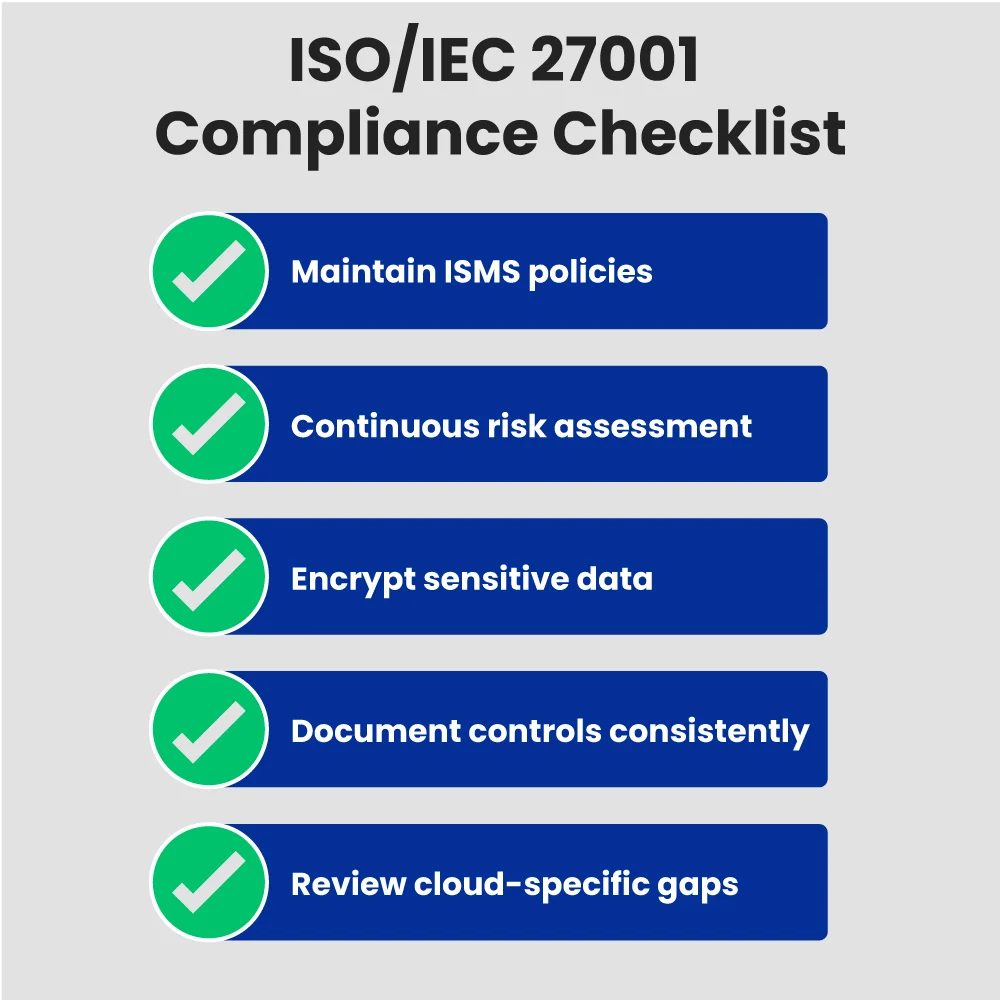
5. ISO/IEC 27001 – Information Security Management System (ISMS)
ISO/IEC 27001 provides a structured framework for managing information security risks. It ensures that systems, processes, and policies are aligned to protect sensitive data and maintain operational integrity.
Who Needs ISO/IEC 27001?
- Organizations seeking internationally recognized security certification
- Teams handling sensitive corporate or customer data
- Companies requiring assurance of reliable data security standards
How Does ISO/IEC 27001 Map To AWS?
ISO/IEC 27001 aligns with AWS tools and compliance frameworks. AWS offers AWS compliance resources, AWS Artifact, and services that support secure configurations and encryption to help you meet certification requirements.
Common Mistakes In ISO/IEC 27001 Implementation
- Treating certification as a one-time project instead of ongoing risk management
- Overlooking cloud-specific security gaps
- Inconsistent documentation of policies and controls
How To Avoid The Mistakes?
- Maintain continuous risk assessment and control monitoring
- Use AWS tools to implement cybersecurity standards consistently
- Keep all policies and evidence up to date for audits
Stay Audit-Ready on AWS Without Slowing Your Team
Clustox helps growing B2B teams operationalize security controls, continuously manage risk, and maintain audit-ready documentation across AWS without turning compliance into a full-time job.
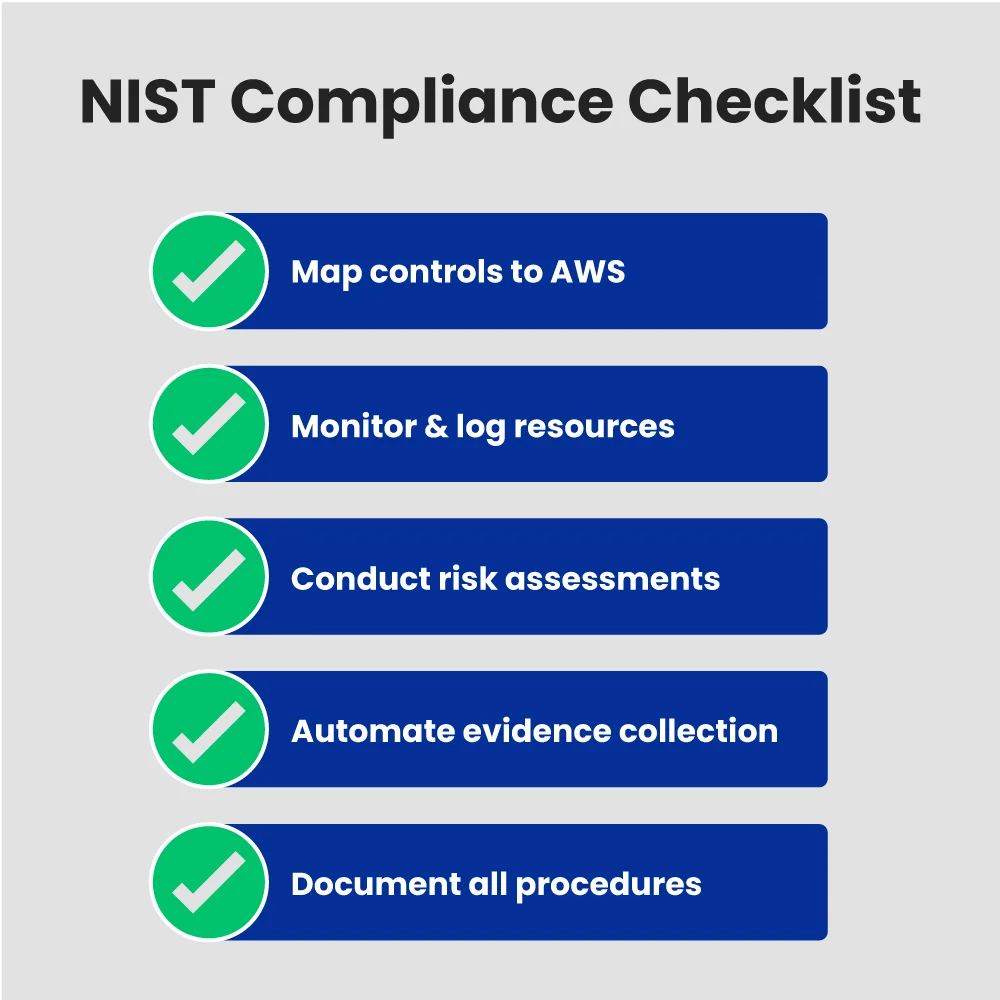
6. NIST (800‑53/800‑171/CSF)
NIST provides structured frameworks of security and privacy controls designed for government and highly regulated environments. Following these frameworks ensures that sensitive data is protected and operational risks are minimized.
Who Needs NIST?
- Federal agencies and contractors
- Enterprises handling regulated or classified data
- Teams aligning with cybersecurity frameworks for compliance
How Does NIST Map To AWS?
NIST controls can be implemented within AWS infrastructure using AWS compliance resources and tools, such as the Well-Architected Framework. Evidence and documentation can be maintained in AWS Artifact to support audits and continuous compliance.
Common Mistakes In NIST Implementation
- Applying generic security practices without mapping to NIST controls
- Ignoring cloud-specific risks in configurations
- Delayed or inconsistent evidence collection
How To Avoid The Mistakes?
- Map NIST requirements directly to AWS services and policies
- Use AWS tools to monitor, log, and enforce security consistently
- Keep audit documentation current and complete
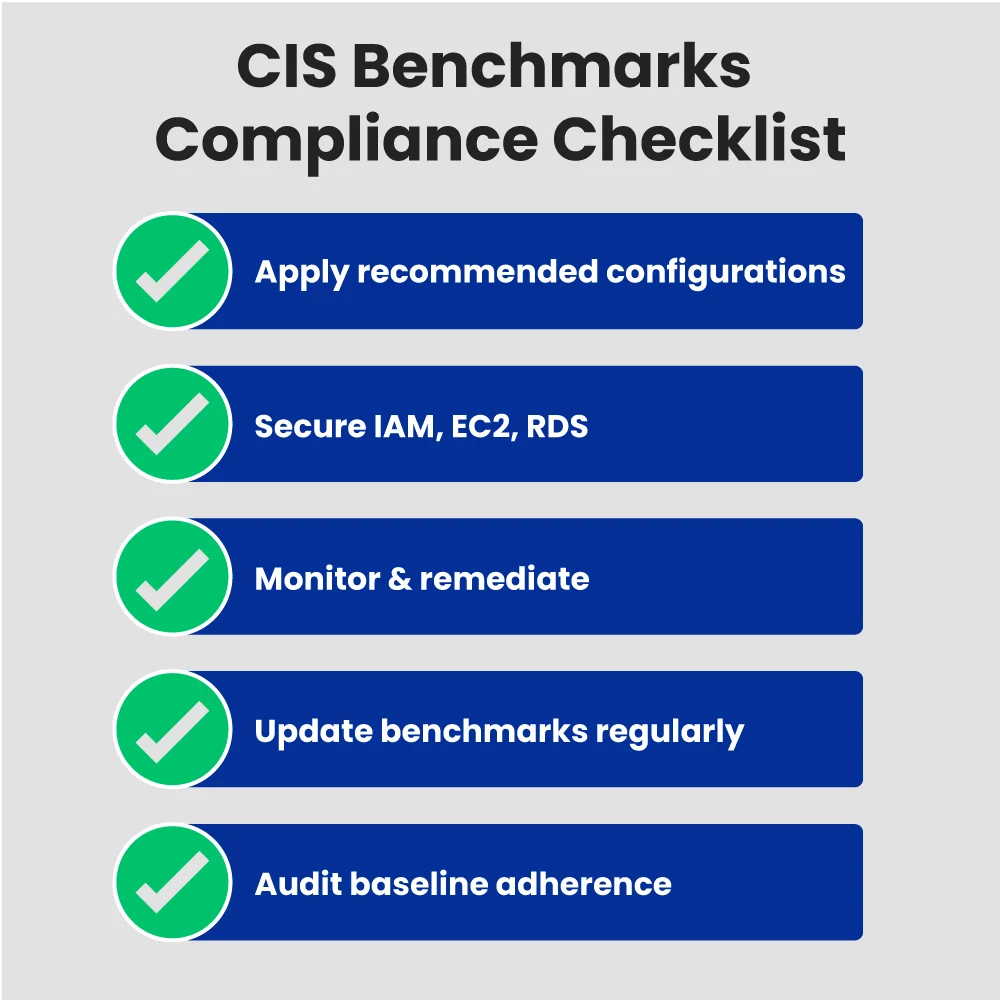
7. CIS Benchmarks
CIS Benchmarks provide prescriptive guidelines for securing operating systems, cloud services, and critical IT components. Implementing them helps prevent common vulnerabilities and ensures a strong security baseline.
Who Needs CIS Benchmarks?
- Teams managing cloud infrastructure like EC2, RDS, or IAM
- Organizations seeking consistent cloud security across services
- IT teams supporting compliance audits
How Do CIS Benchmarks Map To AWS?
AWS services can be configured to follow CIS recommendations, and AWS compliance resources can help monitor adherence. Tools and automated scripts can verify configurations and maintain audit-ready evidence.
Common Mistakes In CIS Benchmark Implementation
- Applying benchmarks partially without the full scope of AWS resources
- Not integrating with monitoring or reporting tools
- Overlooking baseline updates as services evolve
How To Avoid The Mistakes?
- Apply CIS controls systematically across all relevant AWS services
- Use monitoring and auditing tools to enforce configurations
- Keep benchmark mappings up to date with AWS resource changes
How To Choose the Right AWS Compliance Standard For Your Business?
Not all standards serve every purpose. Choosing the wrong one can leave gaps in security, compliance, or customer trust. Selecting the proper standard is just as important as picking the cloud provider itself, because each workload, data type, and regulatory requirement may map differently across platforms.
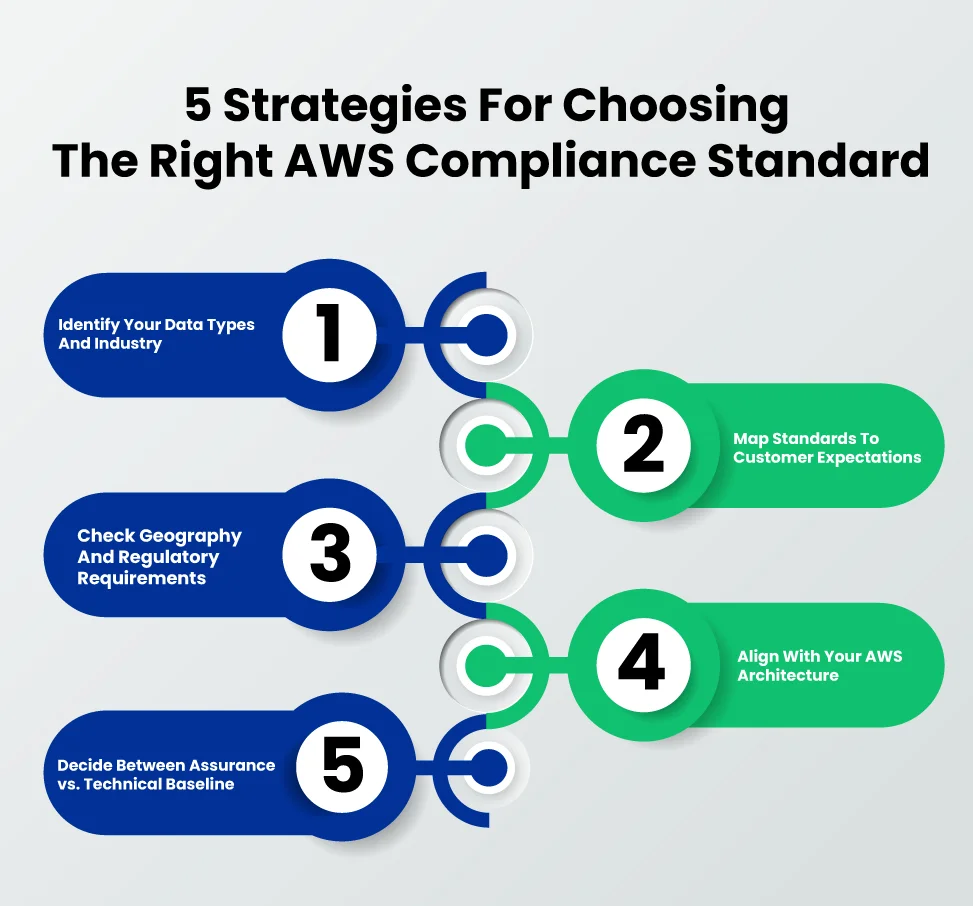
To make the right choice, evaluate the standards against the parameters outlined below:
1. Identify Your Data Types And Industry
Different types of data require different safeguards. Healthcare organizations managing PHI lean toward HIPAA and HITECH, payment processors need PCI DSS, EU-facing services must follow GDPR, and B2B SaaS providers often combine SOC 2 with ISO 27001.
2. Map Standards To Customer Expectations
Enterprise buyers and RFPs often dictate which standards matter most. Knowing what your clients require helps you focus on the key compliance standards that deliver assurance and trust.
- Look for explicit requests like “SOC 2 Type II report required.”
- Consider ISO 27001 if customers expect international recognition.
3. Check Geography And Regulatory Requirements
Compliance isn’t just about your company; it’s about where your data lives and the regulations that apply. Federal/state workloads, defense contracts, and multi-region operations may require NIST 800-53, FedRAMP, or other region-specific standards.
4. Align With Your AWS Architecture
Ensure the services you use are in scope for the standard. Not all AWS services are automatically compliant, so understanding which resources inherit compliance is crucial.
- Check managed databases, analytics platforms, or AI services against your chosen standard.
- Multi-account setups benefit from centralized policies and monitoring.
5. Decide Between Assurance vs. Technical Baseline
Assurance frameworks show auditors and customers that your systems meet formal compliance requirements, while technical baselines focus on keeping your AWS environment secure and reducing misconfiguration risks.
Some standards provide formal assurance, while others focus on operational security, such as
- SOC 2: formal audits and detailed reports for security, availability, and privacy controls
- ISO 27001: internationally recognized ISMS certification with audit evidence
- PCI DSS: validated assessment and reporting for cardholder data protection
- CIS Benchmarks: prescriptive guidance for secure configurations and operational integrity
Conclusion
Running workloads on AWS doesn’t automatically make them compliant. Every misconfigured service, missing policy, or overlooked control can create gaps that put your data, audits, and client trust at risk. SOC 2, HIPAA, ISO 27001, PCI DSS, GDPR, NIST, and CIS Benchmarks each address specific operational and regulatory needs, and knowing which fits your business is critical. Implementing them effectively keeps your cloud environment secure and ensures your audits and reporting stay predictable.
“Compliance is not security. But security must always be compliant.”
— Shamla Naidoo, former CISO, IBM, and Head of Cloud Strategy, Netskope
To truly uphold this principle, responsibilities can’t be handled alone because configuring controls, monitoring activity, and collecting evidence across AWS is complex.
Utilizing AWS consulting services helps you implement key compliance standards, automate monitoring, and maintain accurate audit documentation, turning compliance into a defensible, ongoing practice.
Frequently Asked Questions (FAQs)
2. What Are Common Hidden Compliance Risks In AWS?
Even with AWS infrastructure, misconfigured access controls, incomplete audit logging, and gaps in regional compliance can create serious risks. These often go unnoticed until an audit or security incident occurs. Regular checks and structured evidence collection help close these gaps.
3. How Can Businesses Ensure Multi-Region Compliance On AWS?
Operating across regions requires aligning policies with local laws, such as the GDPR in the EU or the CCPA in California. All controls, logs, and documentation must be consistent across regions. Reviewing each AWS service’s compliance scope is essential to maintaining global audit readiness.
4. Are There Cost-Effective Ways To Maintain Continuous Compliance?
Automating monitoring, evidence collection, and configuration checks minimizes manual effort while maintaining security and compliance. Clustox supports this by implementing AWS-native tools and standards, ensuring workloads stay compliant without overextending internal teams.
5. Does Choosing AWS Lightsail Or EC2 Affect Compliance?
Yes. AWS Lightsail and EC2 differ in terms of control and customization. EC2 offers full control over security and access, making it easier to meet standards like SOC 2 or HIPAA. Lightsail is simpler but may require additional steps to remain compliant. Your choice should align with your workload and the level of hands-on involvement you want with compliance.
______________________________________________________________________________
CTA
Clustox helps teams design, implement, and maintain AWS compliance across SOC 2, ISO 27001, HIPAA, and more, so audits stop being fire drills and become routine.
Clustox helps teams design, implement, and maintain AWS compliance across SOC 2, ISO 27001, HIPAA, and more, so audits stop being fire drills and become routine.