

Ever asked for a quote on UX or graphic design in San Francisco and felt completely overwhelmed?
You call an agency, and they say, “$15,000 for that project.”
You reach out to a freelancer, and it’s $75 an hour.
You do the math… and suddenly your “small project” looks like it could cost a fortune.
If that sounds familiar, you’re not alone.
UX and graphic design pricing in San Francisco can feel unpredictable, but it’s rarely random. In one of the most competitive tech markets in the world, UX directly affects conversion rates, product adoption, and user retention, which is why businesses here invest heavily in getting it right.
Add to that the fact that San Francisco’s cost of living is 63% higher than the national average, and design pricing naturally reflects the level of expertise, research, and strategy required.
Here’s the good news: it doesn’t have to be confusing.
Table of Contents
Once you understand what actually drives UX pricing in San Francisco, budgeting becomes far more predictable.
In this guide, we’ll break down what affects costs, what you can expect to pay, and how to plan your UX and graphic design budget with clarity before talking to designers or agencies.
What Are the Factors That Affect UX & Graphic Design Pricing?
Before looking at numbers, it’s important to understand why UX and graphic design pricing in San Francisco runs higher than in many other markets. You’re not just paying for visuals; you’re paying for decisions that directly affect launch timelines, conversion rates, and long-term product risk.
Several factors consistently influence pricing.
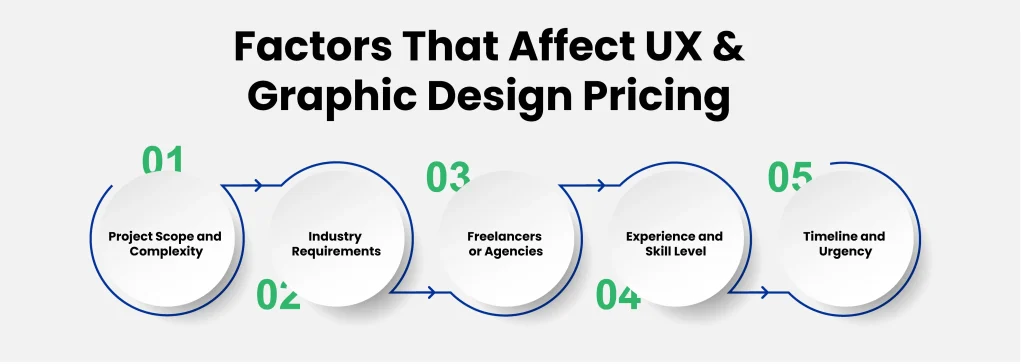
1. Project Scope and Complexity
The size and complexity of your project have the biggest impact on pricing.
- Website UX: A simple 5-page marketing site typically requires 20–40 design hours. Costs stay lower because user flows are limited and content is straightforward.
- App Design: Mobile app development and web app design projects with authentication, dashboards, and multiple user states can easily involve 50–150+ screens. Each screen introduces edge cases, error states, and interaction logic, significantly increasing design time and review cycles.
- UX Research: This is a big one. Research adds upfront cost but reduces downstream risk. Even light research (user interviews or usability testing) can add 1–3 weeks to a project, but it often prevents expensive redesigns and feature rework after development begins.
In short, more screens, features, and user decisions mean more design effort—and higher overall investment.
2. Industry Requirements
Your industry can affect UX and graphic design pricing more than you might expect.
Here’s how costs typically differ depending on the type of business you’re in:
- SaaS: If you’re building a SaaS product, complex dashboards and onboarding flows require extensive interaction design and usability testing to reduce user drop-off. When UX falls short, you’ll often see low activation rates and higher churn.
- Fintech: This is all about trust, especially in fintech for startups, where users are often interacting with a brand for the first time. You need a visual designer who knows how to make security features feel safe and reassuring for your users. This usually means additional testing and iteration to avoid costly usability failures.
- Healthcare: Healthcare projects are often the most resource-intensive. If your product involves sensitive data or clinical workflows, accessibility standards and multi-user environments increase research time and validation cycles.
- eCommerce: Here, you’re paying for conversion. Your budget goes toward optimizing your checkout flow and making sure your product pages turn visitors into buyers.
Industries with higher compliance, complexity, or revenue sensitivity naturally require more design effort and a higher investment.
3. Freelancers or Agencies
Who you hire directly affects your cost structure and delivery risk.
If you choose a freelancer, they’re often a good fit for smaller, well-defined projects with minimal research needs. Your upfront costs may be lower, but capacity and specialization are limited.
When you work with an agency, you gain access to a team, structured processes, and strategic oversight. While pricing is higher, agencies reduce risk on complex projects by managing research, design systems, and cross-functional coordination.
If your project is large or still evolving, higher upfront agency costs can help you avoid delays, misalignment, and expensive rework later.
4. Experience and Skill Level
Experience directly affects how efficiently your project moves forward.
Senior UX designers and consultants typically charge more per hour, but they often:
- Make stronger decisions earlier
- Require fewer revisions
- Identify usability issues before development begins
In many cases, paying a higher UX consultant hourly rate results in a lower total project cost, because your timelines are shorter and mistakes are avoided.
5. Timeline and Urgency
Your timeline also plays a role in pricing.
If you need work delivered quickly, designers may need to reprioritize other commitments, extend working hours, or add resources. On complex projects, tight deadlines can significantly increase UX pricing in San Francisco, especially when speed raises the risk of missed usability issues.
Your UX Budget Should Drive Results… Not Surprises.
Let’s break down the scope, complexity, and design approach your product truly needs.
What Are Typical UX & Graphic Design Costs in San Francisco?
Now that you understand what influences UX and graphic design pricing, let’s look at actual cost ranges. These figures reflect typical San Francisco market rates, not fixed prices. Final costs can vary based on project scope, designer seniority, number of revisions, and whether you’re working with an individual or a full team.
It’s also worth noting that San Francisco pricing is higher than remote or global rates because you’re paying for local senior talent, deeper product experience, and close collaboration in one of the world’s most competitive tech ecosystems.
Below is a breakdown based on the type of project you’re planning.
1. Basic Business/Startup UX Design
If you’re a small business or startup building a simple website or basic app design, your costs typically stay on the lower end. These projects usually involve a limited number of pages and minimal UX research.
| Provider Type | Project Cost | Hourly Rate |
|---|---|---|
| Freelancers | $1,500–$5,000 | $60–$100/hr |
| Agencies | $5,000–$12,000 | $100–$200/hr |
These projects are ideal if you’re testing ideas or establishing an initial online presence with a controlled budget.
2. MVP (Minimum Viable Product) Design
If you’re building an MVP for an app or digital product, your project will likely include wireframes, clickable prototypes, and some UX research to validate your ideas.
| Provider Type | Project Cost | Hourly Rate |
|---|---|---|
| Freelancers | $5,000–$15,000 | $75–$125/hr |
| Agencies | $15,000–$35,000 | $125–$200/hr |
At this stage, hourly pricing can become risky if the scope isn’t clearly defined, as evolving requirements and revisions can quickly increase total costs.
3. Enterprise-Level UX Design
Enterprise UX projects involve multiple stakeholders, extensive research, and scalable design systems. Due to their size and complexity, these projects are most often handled by agencies.
| Provider Type | Project Cost | Hourly Rate |
|---|---|---|
| Freelancers | $20,000–$50,000+ | $100–$150/hr |
| Agencies | $50,000–$150,000+ | $150–$250/hr |
These engagements often span months and include complex user journeys, dashboards, integrations, and ongoing iteration.
4. eCommerce or SaaS Platforms
For eCommerce and SaaS platforms, pricing depends heavily on feature depth, user flows, and optimization requirements. Because UX directly impacts conversions and revenue, additional time is spent on testing and refinement.
| Provider Type | Project Cost | Hourly Rate |
|---|---|---|
| Freelancers | $10,000–$30,000 | $75–$150/hr |
| Agencies | $30,000–$100,000+ | $150–$250/hr |
The more complex your platform, for example, SaaS dashboards or large product catalogs, the higher your investment will be.
Agency vs. Freelancer: Which Fits Your Budget?
Read this quick overview to help you decide which option makes sense for your project:
| Factor | Freelancers | Agencies |
|---|---|---|
| Hourly Rates | $60–$150 | $100–$250 |
| Project Scope | Small to medium | Medium to large |
| Team & Process | Usually one designer | Full team, structured process |
| Research & Strategy | Limited | Comprehensive |
| Ideal For | Small projects or MVPs | Enterprise, SaaS, or eCommerce platforms |
Deciding between a freelancer and an agency depends on your budget, timeline, and project complexity. Freelancers are more cost-effective for smaller projects, while agencies provide deep expertise and resources for larger, complex initiatives.
If you’re looking for a strategic middle ground, Clustox provides senior-led design with a structured process and full cost transparency.
This approach ensures your project benefits from expert guidance, predictable pricing, and efficient workflows, giving you confidence in both the quality and value of your UX investment.
The Cheapest Quote Often Leads to the Most Expensive Product Launch.
Work with senior strategists to align your UX plan with business goals, reduce rework, and control costs in the SF market.
How Can Businesses Budget for UX & Graphic Design Services?
Instead of thinking of UX design as just a cost, treat it as a strategic investment. When you budget thoughtfully, you improve conversions, reduce costly mistakes, and get more value from every dollar spent.
The following are strategies for approaching UX and graphic design budgeting in a smart way.
Consider these factors when picking the right UX designer
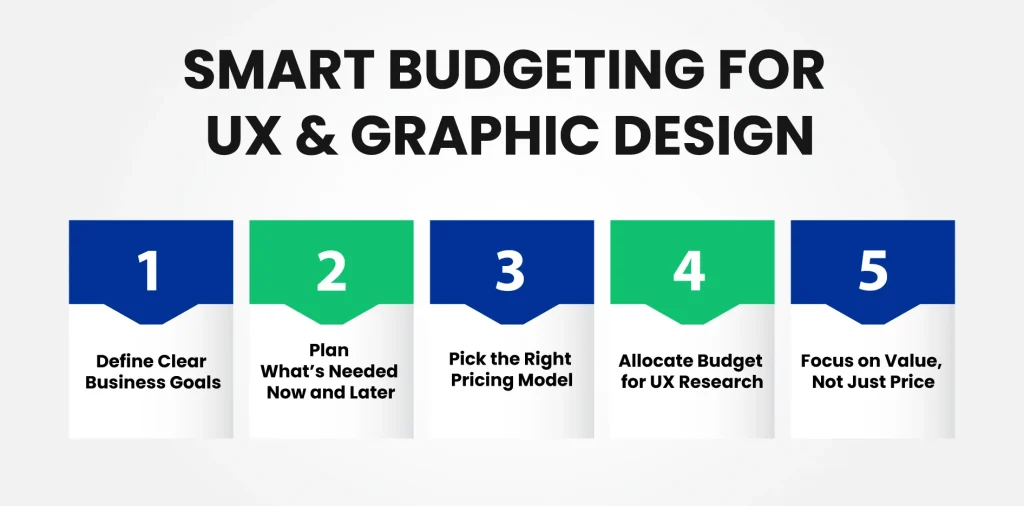
1. Start With Clear Business Goals
Before you talk numbers, you need clarity.
Ask yourself:
- Is this design meant to increase conversions, support a product launch, or improve usability?
- Are you redesigning to fix problems or building something entirely new?
- Do you need UX research, or do you already understand your users well?
Clear goals allow designers to scope work accurately and provide realistic cost estimates. Businesses that lead with outcomes, like sign-ups, sales, or engagement, get far more value than those focused solely on aesthetics.
2. Decide What Must Happen Now and Later
Trying to design everything at once is one of the most common budgeting mistakes.
Instead, prioritize work in phases:
- Phase 1: Core user flows, essential screens, MVP functionality
- Phase 2: Advanced features, animations, secondary user journeys
- Phase 3: Optimization, A/B testing, refinements
This phased approach is especially helpful if you’re a startup or SaaS company trying to control UX design costs in San Francisco while still launching quickly. It also aligns well with an agile software development approach, where design evolves alongside real user feedback.
When your designer knows exactly what’s in scope and what’s not, they can quote your project more accurately and help you avoid surprise costs later.
3. Choose the Right Pricing Model for Your Budget
Not every project fits the same pricing structure, so it’s important to choose a model that works best for your situation.
Hourly rates are best if:
- Your scope is flexible or still evolving
- You’re working iteratively and testing ideas
- You need ongoing UX or graphic design support
Fixed project pricing works well if:
- Your requirements are clearly defined
- Your timelines are firm
- You want budget certainty from the start
Many San Francisco UX agencies also offer monthly retainers, which are useful if you need continuous design support without hiring a full-time designer.
4. Budget for Research
Many businesses try to skip UX research to save money and end up paying more later.
Even light research (user interviews, usability testing, competitor analysis) can:
- Prevent expensive redesigns
- Reduce development waste
- Improve product-market fit
If comprehensive research isn’t possible, ask for a lean UX research approach instead of skipping it entirely. This keeps graphic design pricing efficient while still grounding decisions in real user behavior.
5. Don’t Choose Based on Price Alone
When you’re comparing designers, it’s easy to focus on hourly rates, but that’s rarely the smartest way to choose.
A senior UX designer may charge more per hour, but they often:
- Finish your project faster
- Make stronger strategic decisions
- Help you avoid costly mistakes
In a high-cost market like San Francisco, choosing the cheapest option can result in endless revisions, poor usability, and missed business opportunities. Instead, evaluate the value a designer brings to your business over the raw hourly rate.
How to Choose the Right UX Graphic Designer in San Francisco?
Once you understand UX and graphic design pricing in San Francisco, the next challenge is choosing the right UX designer for your business. With so many freelancers and agencies in the Bay Area, it’s easy to feel unsure about who’s actually worth your investment.
Consider these factors when picking the right UX designer.
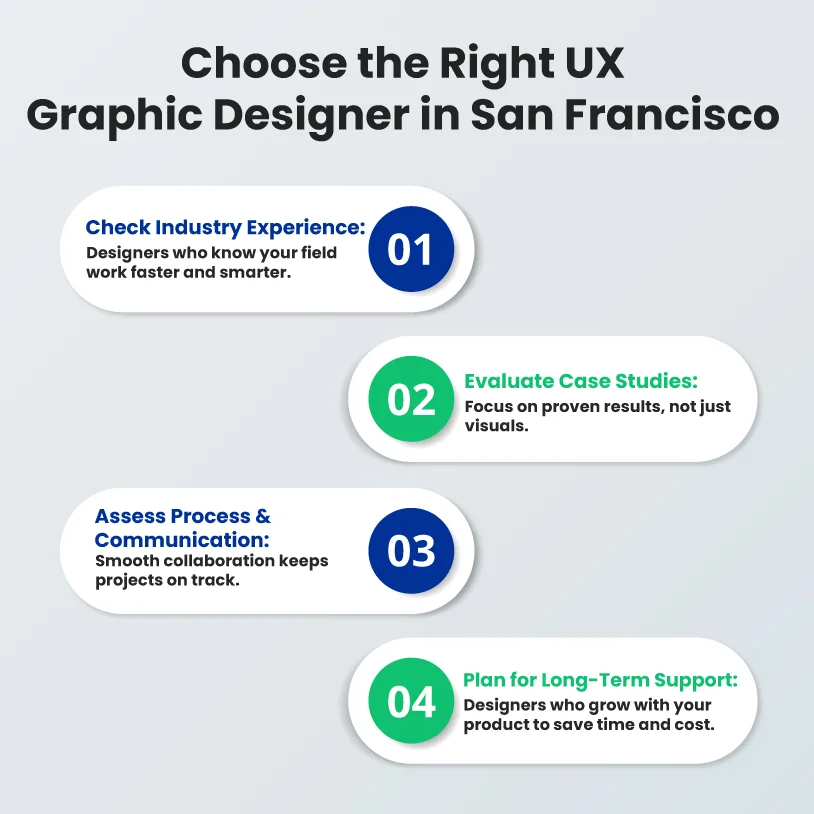
Look for Industry-Relevant Experience
When reviewing designers, focus on if they have experience in your industry or with similar products. A UX graphic designer in San Francisco who understands your space will spend less time learning and more time designing effective user experiences.
It’s also important that they can clearly explain the reasoning behind their design decisions, not just show polished visuals.
Review Case Studies
Strong UX design goes beyond aesthetics. Case studies help you understand how a designer approaches problems, validates ideas, and delivers results. Looking at real project outcomes gives you a better sense of the value behind the UX pricing in San Francisco.
Understand Their Process and Communication
Before hiring a UX designer, it’s important to understand how they work and how they communicate. A good designer should be able to explain their process in simple terms, involve you in regular reviews, and ask thoughtful questions about your business and users.
Clear communication helps prevent misunderstandings, keeps timelines on track, and leads to better design outcomes.
Ask About Long-Term Support
UX and graphic design don’t stop at launch. As your product grows, you’ll likely need updates, refinements, and optimization based on user feedback. Asking about long-term support helps you understand how the designer can continue working with you as your needs evolve, which can save time and cost in the long run.
This is especially valuable in a tech hub like San Francisco, where products often change quickly based on user feedback and business growth.
Clustox UX Design Services: Transparent, Collaborative, and Results-Driven
Clustox works with San Francisco businesses to design user experiences that are simple, functional, and aligned with real business goals. Our UX design services in San Francisco focus on clarity, usability, and long-term value, without unnecessary complexity or unclear costs.
Here’s how we create results for your business:
- Predictable Costs & Clear Scope: You know your budget upfront, reducing the risk of overruns and costly surprises.
- Validated UX Solutions: From user research to MVP and full product design, your product decisions are grounded in real user insights, not assumptions.
- Faster Product Iteration: Continuous support for updates and scaling helps you respond quickly to user feedback and market changes.
- Collaborative Decision-Making: Regular communication and feedback loops ensure your team stays aligned and confident at every stage.
- Higher Adoption & Conversion: Design choices are focused on usability and business impact, so your users engage more, convert faster, and stay longer.
With Clustox, you get a UX partnership that reduces risk, controls costs, and accelerates business outcomes in the competitive San Francisco market.
Final Thoughts
In a city like San Francisco, your users have zero patience for a “bad” experience. Expectations are high, competition is intense, and design plays a direct role, no matter if users stay, convert, or leave.
UX and graphic design pricing in San Francisco can feel expensive at first, but those costs usually reflect the level of expertise, research, and problem-solving involved. Once you understand what influences pricing, from project scope and industry requirements to experience and timelines, budgeting becomes far more predictable.
For businesses, the goal isn’t to find the cheapest option. It’s to work with designers who understand your users, align with your business goals, and can deliver designs that scale as your product grows.
With clear priorities and the right partner, UX and graphic design stop feeling like a risky expense and start delivering long-term value.
Frequently Asked Questions (FAQs)
2. How Can Startups Manage UX Design Costs Effectively?
Focus on your core features first and break your project into phases. Use lean UX research to validate ideas without overspending, and prioritize MVP design to launch quickly while ensuring a strong user experience.
3. How Long Does A Typical UX Project Take In San Francisco?
Project timelines vary:
Small website or app: 2–6 weeks
MVP: 6–12 weeks
Enterprise-level or complex SaaS: several months
Planning phases carefully and prioritizing features can reduce delays and cost overruns.
4. What ROI Can Businesses Expect From Investing In Professional UX Design?
When you invest in professional UX, you’re likely to see higher conversions, improved user retention, and fewer costly redesigns. A good UX can make your product easier for your users to navigate, which directly translates into more engagement, sales, and long-term savings.
5. Should You Outsource UX Design or Hire Local Teams in SF?
Outsourcing can reduce costs and provide flexibility, but local teams offer closer alignment with your market, faster collaboration, and a better understanding of SF-specific user behavior. Choosing the right mix depends on your budget, timeline, and product complexity.
6. What Ongoing Design Support Models Are Available?
Many agencies and consultants offer retainers, subscription-based services, or ad-hoc support. Ongoing support ensures you can iterate quickly, respond to user feedback, and scale your product without the cost of hiring full-time designers.
Still Have Questions About Your Specific Project’s Timeline or Market Fit?
Get a personalized roadmap designed to accelerate adoption, reduce revisions, and launch confidently in San Francisco.