



We probably don’t think twice about the apps we use every day, like ordering food, booking rides, or just checking the weather. It all feels effortless, right?
But if you’ve ever tried building something similar for your business, you know it’s anything but easy. Deadlines slip out of your hands, requirements change at the last minute, and teams scramble to keep up. Even small projects can feel like juggling fire.
That’s why companies are turning to agile frameworks. The 17th State of Agile Report showed that around 71% of organizations now use Agile in their software development life cycle (SDLC). The statistic speaks for itself.
When we say Agile, it’s not just about speed. It’s about ensuring teams stay aligned, adapt to change, and deliver what the business needs.
In this blog, we’ll go back to the basics of agile methodology in software development. We’ll also discuss how agile software development helps businesses grow in today’s dynamic environment.
Ready, set … let’s go.
What Is Agile Software Development?
Simply put, it’s a way to build software that emphasizes flexibility, collaboration, and fast value delivery. Instead of following a rigid, step-by-step plan, teams work in short cycles (aka sprints), adapt quickly to changes, and keep communication tight across departments.
It’s a bit like cooking a new dish for the first time. You don’t always follow it to the letter. Instead, you taste, tweak, and adjust as you go until the dish turns out just right. Each iteration brings you closer to the perfect dish.
Table of Contents
Likewise, agile software development methodology lets businesses experiment, learn, and deliver results faster without getting stuck in long planning phases.
For Example:
You can see how Netflix achieved scalable growth with speed and agility. It wasn’t a first-mover in its industry, but it balanced innovation and operational reliability. Behind the scenes, teams were iterating quickly, experimenting often, and keeping feedback flowing across departments.
What Is The Agile Manifesto?
The Manifesto for agile software development was created in 2001 by 17 software practitioners who wanted a better way to manage projects. They realized that rigid processes slowed teams down and often delivered the wrong outcomes.
For modern businesses, this manifesto is the foundation for how teams stay flexible, responsive, and aligned with customer needs. It guides everything from agile development life cycle design to sprint planning.
Now, let’s go over the 4 core values and the twelve guiding principles they entail.
What Are The 4 Values of the Agile Manifesto?
These four values capture what really drives successful teams. They show where energy and focus matter most to get work done efficiently while keeping people and outcomes at the center.
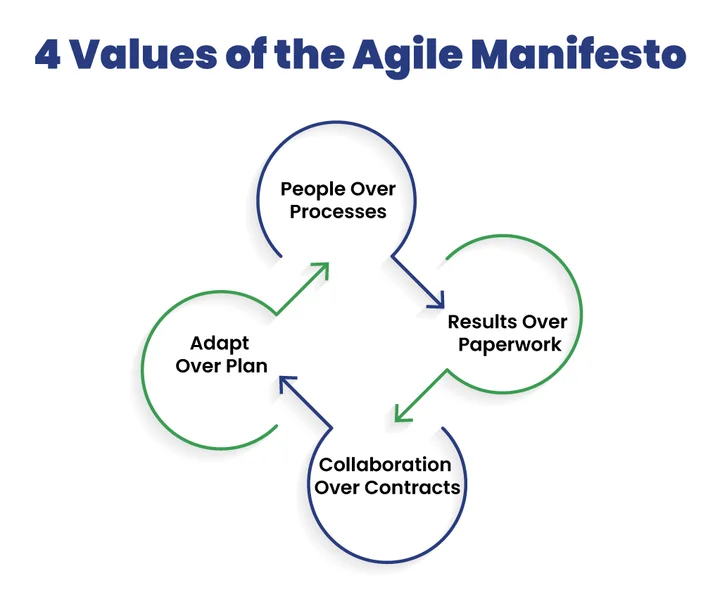
1. Individuals And Interactions Over Processes And Tools
Teams perform best when communication flows freely. Processes help, but cross-functional collaboration and transparency matter more for delivering results.
2. Working Software Over Comprehensive Documentation
Deliver tangible outcomes rather than drowning in paperwork. Early feedback on working products ensures the project is on the right track.
3. Customer Collaboration Over Contract Negotiation
Business needs evolve. Regular engagement with stakeholders prevents misalignment and keeps the product relevant.
4. Responding To Change By Following A Plan
Plans are helpful, but the market rarely waits. Agile values emphasize adaptability to maintain business relevance and reduce risk.
What Are The 12 Principles of the Agile Manifesto?
These 12 agile principles provide actionable guidance for teams and organizations looking to embed agility into every layer of work.
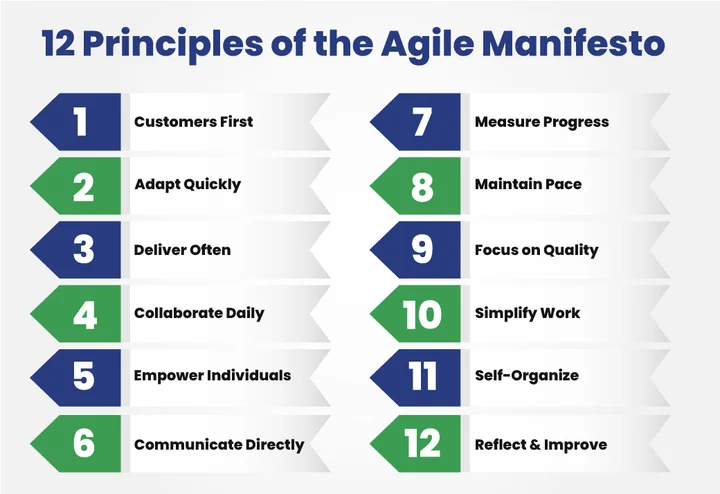
- Our top priority is delighting the customer through frequent and continuous delivery of valuable software.
- Embrace changes in requirements, even if they are late in the development cycle.
- Release working software often, ideally every few weeks or months, favoring shorter intervals.
- Business leaders and developers should collaborate daily throughout the project.
- Build teams around motivated individuals, provide them with the right environment and support, and trust them to perform.
- Face-to-face conversations are the most effective way to share information.
- Progress is best measured by the software that actually works.
- Agile promotes sustainable development, allowing sponsors, developers, and users to maintain a steady pace over time.
- Consistently focus on technical excellence and good design to boost agility.
- Keep things simple by prioritizing only the work that truly matters.
- The best architectures, requirements, and designs emerge from self-organizing teams.
- Teams should regularly reflect on their effectiveness and make adjustments to improve continuously.
Feeling Like Your Project Is A Train That Never Arrives On Time?
Why Does Agile Methodology Matter for Businesses?
Agile might still get tossed around as a buzzword. But it’s far more than that. In a world where priorities shift, markets evolve, and customer expectations keep climbing, rigid approaches quickly fall behind.
Companies that favor an interactive and incremental software development approach see agile frameworks as a lifeline. Alongside the right software development partner, startups, SMEs, and enterprises are integrating these principles into how they work every day.
Here’s why agile is absolutely transformative for businesses:
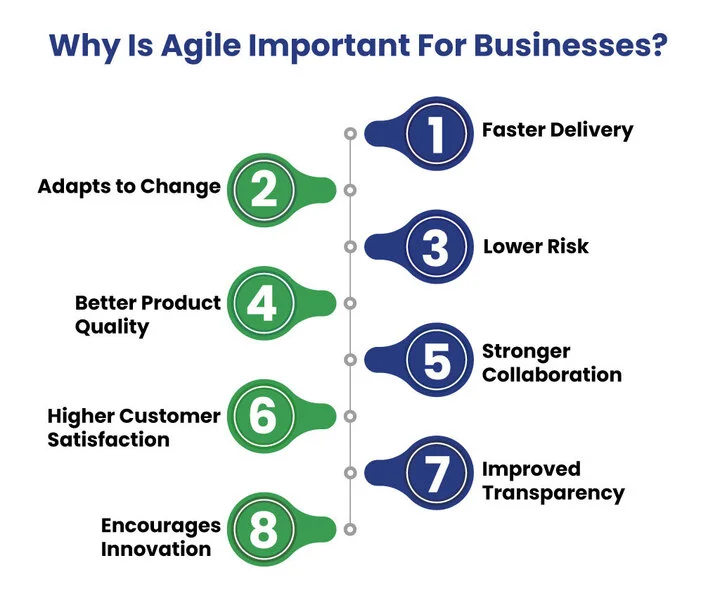
1. Faster Delivery
Agile enables teams to release smaller, functional pieces of software more frequently, which:
- Reduces time to market for critical features
- Provides early feedback loops from users
- Avoids long, drawn-out development cycles that risk irrelevance
2. Adapts to Change
Agile teams can pivot when requirements shift or new opportunities arise. It:
- Incorporates late-stage changes without halting progress
- Keeps products aligned with evolving customer needs
- Minimizes wasted effort on features that no longer add value
3. Lower Risk
Frequent iterations and incremental releases reduce the chance of project failure. An agile system:
- Detects defects earlier and limits large-scale errors
- Offers manageable checkpoints for course correction
- Builds confidence across stakeholders by showing consistent progress
4. Better Product Quality
Quality is built in from the start rather than added as an afterthought.
- Continuous testing catches issues early.
- Iterative improvements refine the user experience.
- Aligns product outcomes with both business and user expectations
5. Stronger Collaboration
Agile encourages teams to communicate continuously across functions by:
- Breaking down silos between teams
- Fostering accountability and ownership within the team
- Ensuring shared understanding of priorities and responsibilities
6. Higher Customer Satisfaction
Delivering value early (and often) strengthens trust and loyalty. With an agile-backed software delivery:
- Teams can respond quickly to feed
- Fosters long-term engagement and retention
- Customers see measurable progress frequently
7. Improved Transparency
Progress is visible to everyone, enabling informed decision-making. Managers and stakeholders can see the project’s real state, which:
- Reduces surprises and aligns expectations
- Encourages trust through clarity and openness
8. Encourages Innovation
Agile empowers teams to experiment and learn quickly.
- Safe environment for testing new ideas
- Fast failure cycles allow for real-time learning
- Mistakes become stepping stones rather than setbacks
Types Of Agile Methodology in Software Development
There are several types of agile methodologies. Each takes a slightly different approach, but all share the same core principles. Teams pick a framework based on project size, complexity, and organizational culture.
Among these options, five stand out as the most widely used: Scrum, Kanban, Lean, Extreme Programming, and Crystal.
So, which agile framework do most teams rely on?
Scrum leads are adopted by 87% of organizations, followed by Kanban at 56% (Digital.ai 16th State of Agile Report).
The table below shows what each type means, along with its pros and cons.
| Type | Definition | Pros | Cons |
|---|---|---|---|
| Scrum | Iterative framework with fixed-length sprints | Clear roles, frequent feedback | Can feel rigid, requires training |
| Kanban | Visual workflow system for continuous delivery | Flexible, easy to track progress | Less structured, requires discipline |
| Lean | Focuses on eliminating waste and maximizing value | Efficient, cost-effective | Can overlook technical debt |
| Extreme Programming (XP) | Emphasizes engineering practices like TDD and pair programming | High code quality | Needs skilled developers |
| Crystal | Lightweight, adaptable framework based on team size | Flexible, human-centric | Less guidance for large projects |
Wrapping It Up
Fortune 500 companies are adopting and rigorously implementing agile best practices.
Why is it so?
Because it’s not just a framework; it’s a mindset that reshapes how teams approach work and deliver results in a world of change.
Organizations that cling to rigid, slow processes feel the constant pressure of shifting priorities. Missed opportunities, frustrated customers, and overworked teams become the norm.
Agile offers a structured approach to managing uncertainty, keeping teams aligned, and maintaining momentum even when the unexpected arises.
So, what’s the next step for your team?
Start by evaluating which agile framework aligns with your project goals, culture, and pace. Even small changes in how you plan, communicate, and iterate can make a significant difference.
Frequently Asked Questions (FAQs)
2. What Are The Common Challenges When Adopting an Agile Approach?
There are several benefits of agile software development, but it also comes with its own challenges. Some of them include resistance to change, unclear team roles, or poor backlog management. Success depends on proper coaching, alignment with business goals, and the use of agile development tools like Jira or Trello to maintain visibility and workflow clarity.
3. How Can Startups Benefit from Agile Project Management?
Startups using the agile development methodology can test ideas quickly, respond to customer feedback, and release functional software faster. This iterative approach reduces wasted effort, helps refine product-market fit, and lets small teams scale efficiently without overextending resources.
Big Systems. Big Teams. Big Results.
It’s not out of reach; you just need a clear path.