


Remember the days of skipping endless songs on an MP3 player?
Yeah, we’ve come a long way.
Today, music streaming apps deliver millions of tracks in seconds, match your mood without asking, and somehow still keep up with your most unexpected music phases. They help you find new artists, build playlists for every part of your day, and slowly become a soundtrack you rely on.
And the growth behind all of this is massive. The global online music streaming market hit $29.6 billion in 2024 and is expected to reach $53.97 billion by 2027. This shows just how quickly listeners and opportunities are increasing.
More users in 2026 means more room for anyone exploring music streaming app development.
If you’ve ever wondered what it takes to develop an app like Spotify, stick around, because we’re going to break it down step by step in a way that actually makes sense.
Alright, let’s take a closer look at why these apps matter more than ever!
The Growth of Music Streaming Apps
Music streaming apps have gone from being a nice-to-have to something people rely on every single day. Listening to music is all about mood, focus, entertainment, and even social connection.
Table of Contents
Apps like Spotify and Apple Music have made it easy to explore millions of tracks, follow artists, and share playlists with friends, which keeps users coming back again and again.
And the numbers tell the same story. Usage keeps climbing, and the audience keeps expanding as more people around the world get access to faster internet and smartphones.
The following statistics show just how broad music streaming has become and why it’s such a promising space for developers and startups alike.
- Forbes reports that music streaming makes up 89% of the total music industry revenue, highlighting just how dominant it has become.
- According to a report by Statista, there are 90 million paid music streaming subscribers in the United States, showing just how many people are willing to pay for high-quality streaming.
- A report indicates that people spend an average of 20 hours per week streaming music, which shows just how much time listeners are dedicating to these apps.
- Spotify continues to hold the biggest share of the streaming market, with 713 million monthly active users in 2025, making it the go-to app for most listeners.
- A 2025 report shows that Apple Music has over 94 million subscribers and generated approximately $9.2 billion in revenue, highlighting its strong position in the music streaming market.
All these stats show just how much opportunity there is in the music streaming space. The next step is figuring out what features make an app stand out.
What Are the Essential Features of a Music Streaming App?
When it comes to building a music streaming app, the features you include can make or break the experience. Users want discovery, personalization, and ways to connect with their music and friends. Getting these core features right is important in keeping listeners hooked and coming back for more.
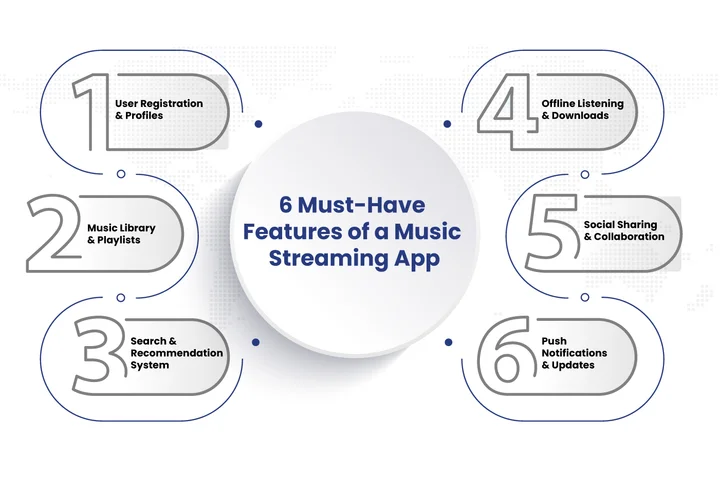
These features help make a music streaming app engaging, user-friendly, and something listeners will want to return to.
User Registration & Profiles
The first thing any music app needs is a way for users to create their own profiles. It’s like setting up your own little corner in the app where everything feels personal. Profiles let users save playlists, follow artists, and keep track of what they love.
Signing up with email, phone, or social accounts should be quick and easy, and small touches like a profile picture or favorite genres make users feel at home and more likely to return.
Music Library & Playlists
A well-organized music library is the heart of any streaming app. Users expect to browse millions of tracks, search by artist, album, or genre, and easily build playlists for every mood.
Offering curated playlists for occasions like workouts, study sessions, or weekend chill time adds a personal touch.
Search & Recommendation System
Finding the right song quickly is a must. A smart search feature paired with personalized recommendations keeps users engaged and exploring. Algorithms that suggest new tracks based on listening habits make the app feel like it “gets” the listener.
Offline Listening & Downloads
Not everyone has Wi-Fi everywhere, and nobody wants to be stuck buffering on the subway. Offline listening allows users to download their favorite tracks or playlists and enjoy music anytime, anywhere. It’s a simple feature that can make a huge difference in user
satisfaction.
Social Sharing & Collaboration
Music is more fun when it’s shared. Users can follow friends, share playlists, or even collaborate on creating their own playlists. Social features turn a simple music app into a small community, keeping users coming back to see what others are listening to or to share their latest discoveries.
Push Notifications & Updates
Notifications can be used to highlight new releases, suggest playlists, or remind users about saved tracks. Personalized updates based on listening habits make the app feel alive and tuned to each individual, without feeling intrusive.
With the must-have features in mind, it’s time to see exactly how to bring a music streaming app to life, step by step.
Users Don’t Stick Around For Clunky Apps. Is Yours One of Them?
A Step-by-Step Guide to Building a Music Streaming App in 2026
Developing a music streaming app might seem like a huge puzzle at first, but breaking it down makes it way more manageable. From planning and designing to development and launch, each stage plays a role in creating an app that keeps users coming back.
Getting a clear roadmap is essential. Therefore, follow along as we walk through the process in the following simple steps to help you understand how to build a music streaming app from scratch:
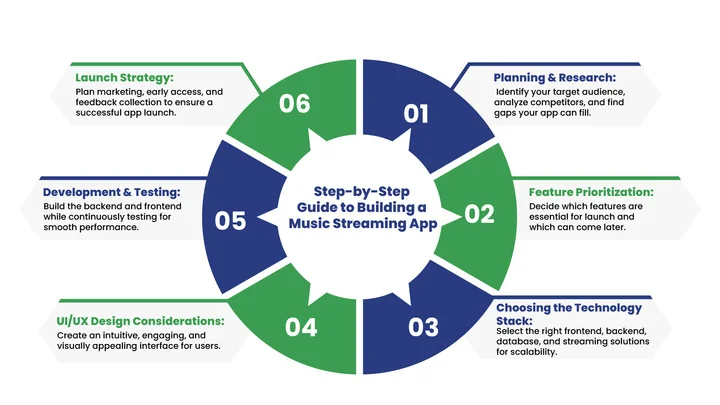
1. Planning & Research
Every successful app starts with research. Identify your target audience, analyze competitors like Spotify and Apple Music, and figure out what gaps your app can fill. Knowing who you’re building for and what they want sets the foundation for every decision down the line.
2. Feature Prioritization
Not every idea needs to make it into your first version. Decide which features are essential for launch (like user profiles, playlists, and offline listening) and which can come later. This helps keep development manageable and ensures your first version is strong and usable.
3. Choosing the Technology Stack
The tech stack determines how your app runs, scales, and performs.
Popular options for music streaming apps include:
- Flutter or React Native for cross-platform mobile development
- Node.js, Python, or Java for backend services.
You’ll also need a reliable database and streaming solution to handle large volumes of audio. Picking the right stack early makes development smoother and future updates easier.
4. UI/UX Design Considerations
The user experience is everything. Keep the interface clean, intuitive, and easy to navigate. Users should be able to find songs, create playlists, and explore recommendations without frustration.
Fun touches, like animations for playing tracks or smooth transitions between screens, make the app feel polished and enjoyable. Working with an expert UI/UX design team can take your app to the next level, ensuring it is both engaging and easy to use.
5. Development & Testing
Once the design is ready, the coding begins.
Backend development handles music streaming, storage, and user data, while frontend development creates the interface users interact with. Testing at every stage is so important; bugs, crashes, or slow streaming can drive users away fast.
Make sure both the app and streaming service work smoothly together.
6. Launch Strategy
Launching isn’t just hitting “publish.”
You need a plan to attract users, like pre-launch marketing, early access invites, or social media campaigns. Gathering feedback during the early stages helps refine features, fix issues, and build hype for your app.
What Is the Cost of Developing a Music Streaming App?
The cost of building a music streaming app depends on what you want to launch first. Investing in MVP development with essential features is a faster, more budget-friendly way to get your app to market, while creating a full-featured, fully polished app will require more time and resources.
Here’s a rough comparison:
| App Type | Description | Estimated Cost (USD) |
|---|---|---|
| MVP (Minimum Viable Product) | Core features only: user profiles, playlists, basic search, offline listening | $30,000–$50,000 |
| Full-Feature App | All features: recommendations, social sharing, push notifications, polished UI/UX, backend scaling | $80,000–$150,000 |
Your total cost will depend on how many features you prioritize, the platforms you target, and the complexity of the design and backend infrastructure.
Once you know the budget, the next step is to generate revenue from your app, which is what we’ll cover next.
High Development Costs Don’t Have to Hold You Back.
How to Monetize a Music Streaming App?
Building a music streaming app is exciting, but the big question is,
“How do I make money from it?”
There are a few tried-and-true ways that most successful apps use, and mixing them smartly can keep revenue flowing while keeping users happy, such as:
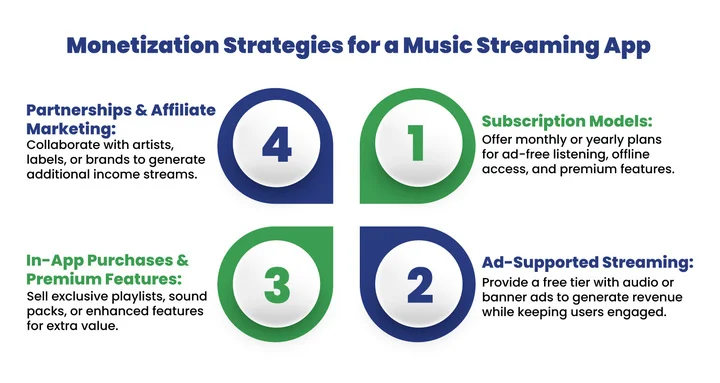
Subscription Models
Subscriptions are the bread and butter for many music apps. Users pay a monthly fee for ad-free listening, offline access, and premium features. It’s all about giving listeners more control, better quality, and extra perks that make their experience feel special.
Ad-Supported Streaming
Not everyone wants to pay for music, so a free, ad-supported tier can work well.
Free tiers with audio or banner ads can generate revenue while giving users access to the library. Balancing ad frequency so it doesn’t annoy listeners is key.
In-App Purchases & Premium Features
You can offer extra goodies like exclusive playlists, special sound packs, or improved discovery features for a one-time or recurring fee. These add-ons let users pay for value that matters most to them without forcing everyone into a subscription.
Partnerships & Affiliate Marketing
Some apps earn money through partnerships with artists, labels, or brands. For example, featuring a new album launch or promoting concerts can generate revenue while keeping the content fresh and exciting.
The right monetization strategy comes down to understanding your audience and what they truly enjoy. Some apps combine subscriptions, in-app purchases, and smart partnerships to create multiple revenue streams while keeping users engaged and coming back for more.
With the right approach, your app can captivate users and stand out in the growing music streaming market.
The Bottom Line
As we conclude, it’s clear that music streaming apps offer huge potential for innovation and business success. Successful apps focus on features that users love, follow a clear development roadmap, and use a monetization strategy that fits the audience.
If you’re going for a simple MVP or a full-featured app, focusing on user experience, smart feature choices, and revenue options will set your app apart. With the right mobile app development services, your music streaming app can become part of people’s daily soundtrack and maybe even the next big hit in the market.
Now, it’s time to turn your idea into the tunes people can’t stop playing!
Frequently Asked Questions (FAQs)
2. How Do Top Music Streaming Apps in 2025 Keep Users Engaged?
The big players know it’s all about making the app feel personal. Features like curated playlists, smart recommendations, offline listening, and social sharing keep people coming back. Regularly adding fresh content and making sure the app is easy and fun to use makes a huge difference.
3. What Backend Technology Works Best for Music Streaming Apps?
An effective backend tech is what keeps the music flowing smoothly. Many apps use Node.js, Python, or Java to handle streaming, user data, and app performance. Pairing these with scalable databases and cloud streaming solutions ensures your app can handle lots of listeners without any hiccups.
4. What Are the Common Mistakes to Avoid in Music Streaming App Development?
Some of the biggest pitfalls include skipping user research, trying to pack in too many features at once, ignoring design, or skimping on testing. Overlooking server capacity or copyright issues can also cause headaches.
5. Can Startups Compete With Big Players Like Spotify and Apple Music?
Absolutely! Startups can win by focusing on unique experiences, targeting specific audiences, or offering features that the giants don’t. Starting small with an MVP, gathering real user feedback, and improving along the way can help smaller apps find their audience and thrive.
Give Your Users the Music App They’ve Been Waiting For.