


Early mornings can be challenging, as they require balancing work, sleep, and personal commitments while maintaining a consistent fitness routine. Many people struggle to track progress effectively or adjust workouts according to their body’s needs.
Al-powered fitness apps are transforming this experience by analyzing user activity, heart rate, sleep patterns, and more to provide personalized workout and health recommendations.
Globally, health and fitness apps reached over 3.6 billion downloads in 2024, reflecting the growing demand for innovative, adaptable solutions.
This blog will guide you in creating innovative health-tracking app development solutions that deliver a fully personalized fitness experience.
Let’s start now!
What Sets AI Fitness App Development Apart Today?
AI fitness apps help people take a more innovative approach to fitness, going beyond simple step counts and standard exercises.
Unlike traditional fitness apps, these solutions analyze user behavior, biometrics, and lifestyle patterns to provide individualized, adaptive, and actionable insights. This makes workouts smarter, health tracking more accurate, and nutrition guidance more relevant to individual users.
Core features that create a holistic fitness experience include:
Table of Contents
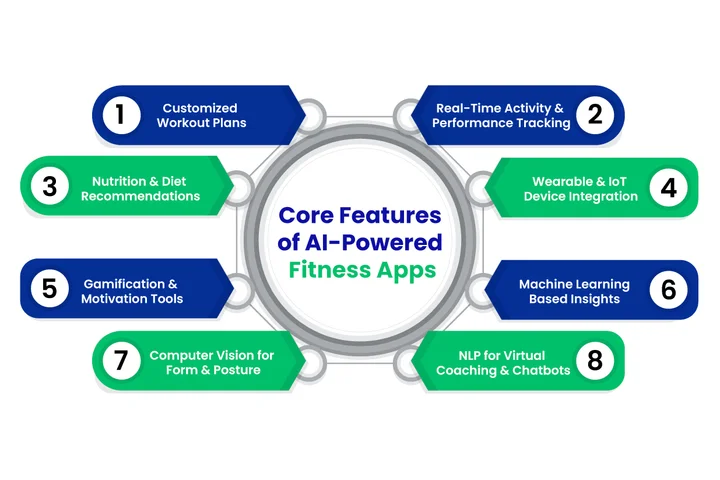
- Personalized Workout Plans: Adjust exercises and routines according to goals and progress.
- Real-Time Activity and Performance Tracking: Capture steps, heart rate, calories, and sleep patterns.
- Nutrition and Diet Suggestions: Recommend meals and track calorie intake.
- Wearable Integration and IoT Compatibility: Sync with smartwatches, fitness trackers, and other devices for accurate data.
- Gamification and Motivation Features: Encourage consistent use through challenges, badges, and rewards.
Al technologies behind these apps improve functionality and personalization:
- Machine Learning: Provides intelligent recommendations and identifies user behavior patterns.
- Computer Vision: Detects exercise form and posture to prevent injuries.
- Natural Language Processing (NLP): Powers virtual coaching, chatbots, and voice interactions.
- Predictive Analytics: Forecasts recovery times, performance trends, and potential health risks.
These features make AI in fitness apps highly engaging, innovative, and personalized, helping users stay motivated and make informed health decisions.
Apps that feel clunky or generic lose users fast. Deliver AI fitness apps that engage and retain users.
How Can You Build an AI Fitness App for Smart Health Tracking?
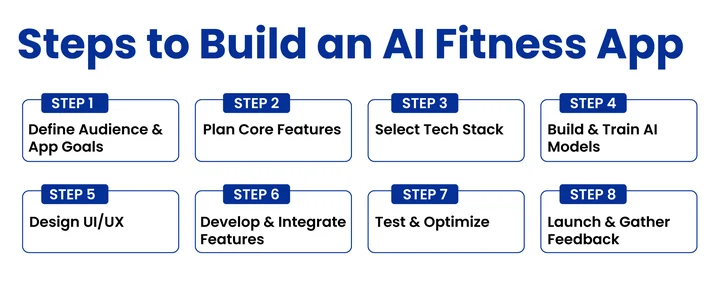
Building an AI fitness app requires a straightforward, structured approach to deliver smart workout tracking, Al-powered health monitoring, and a customized user experience. Each step helps transform your idea into a fully functional, engaging app that meets real user needs.
In the following sections, we’ll walk you through the essential stages involved in developing a smart AI fitness app.
Step 1: Define the Target Audience and App Objectives
The first step is to define your target audience and app objectives clearly. Developing features that truly satisfy your users’ needs requires understanding who will use your app.
Understanding your users is essential for the fitness app development process. Your audience could range from fitness enthusiasts to beginners or people looking for AI health monitoring solutions. Consider their age, lifestyle, fitness goals, and comfort with technology.
Once the audience is clear, define the core objectives of your app. These may include:
- Delivering Al-powered health insights for smarter tracking
- Providing personalized workout suggestions based on user data
- Enabling comprehensive health monitoring, including activity, nutrition, and vital stats
- Improving user engagement, retention, and satisfaction through tailored experiences
Conducting market research can also provide insights into competitor apps and help you identify features that set your Al fitness app apart.
Step 2: Design AI-Driven Features for Personalized Fitness
After defining your target audience, the next step is to plan the core features and AI functionalities that will make your app innovative and engaging. This ensures the app delivers real value while leveraging AI to personalize workouts and health tracking.
Plan features that make your smart workout tracking app engaging and valuable. Essential features to include:
- Personalized Workout Plans: AI generates exercises based on user goals, fitness level, and progress.
- Real-Time Activity Tracking: Monitor steps, workouts, heart rate, and calories burned.
- Al-Powered Health Insights: Predictive analytics for health trends, recovery, and performance optimization.
- Nutrition and Diet Guidance: AI recommends meal plans and tracks calorie intake.
- Exercise Form Detection: Computer vision to correct posture and prevent injuries.
- Wearable and IoT Integration: Sync with smartwatches and fitness trackers for accurate data.
- Gamification and Motivation: Badges, challenges, and rewards to keep users engaged.
Planning these features ensures your app not only tracks health effectively but also provides a customized and motivating fitness experience for users.
This ensures the personalized training app delivers a motivating, innovative, and user-centric fitness experience.
Step 3: Select the Right Tech Stack and AI Frameworks
The technology behind a smart AI fitness app determines its performance, scalability, and ability to deliver Al-driven health tracking and unique workouts. A smooth and enjoyable user experience largely depends on the choice of frontend, backend, and Al frameworks.
Frontend Development
The frontend defines how users interact with the app. Popular technologies include:
- React Native: enables cross-platform apps for iOS and Android with a single codebase.
- Flutter: known for fast performance and smooth UI across platforms.
- Swift: ideal for iOS-specific apps.
- Kotlin: suitable for Android-specific apps.
A strong frontend ensures a responsive, intuitive interface that keeps users engaged, and this can be achieved through custom frontend development services suited to your app’s needs.
Backend Development
The backend manages data processing, user management, and AI integration. Standard backend options include:
- Node.js: lightweight and scalable for real-time data handling.
- Python with Django or Flask: excellent for AI integration and analytics.
- Java or .NET: used for enterprise-level apps requiring robust backend support.
A reliable backend ensures smooth data flow and supports all Al-powered features effectively, often implemented through specialized backend development services.
AI and Machine Learning Frameworks
Al frameworks power the intelligent features of the app, including individual workouts, predictive health insights, and computer vision for exercise form detection:
- TensorFlow: widely used for training AI models and analytics.
- PyTorch: ideal for computer vision and deep learning tasks.
- Scikit-learn: supports predictive modeling and data analysis.
- Keras: simplifies the efficient building of deep learning models.
Using the right AI frameworks ensures accurate insights, intelligent recommendations, and a custom fitness experience for every user, which is achievable with AI and ML solutions designed for health and fitness apps.
Step 4: Build the User Interface (UI/UX) for Engagement
A well-designed user interface (UI) and user experience (UX) are essential for keeping users engaged with your AI fitness app. The design should make it easy for users to navigate the app, access workout plans, track health metrics, and receive Al-powered recommendations.
A clean, intuitive interface increases usability, encourages consistent usage, and raises overall satisfaction.
Focus Areas for UI/UX Design:
- Intuitive Navigation: Users can access workouts, health tracking, and insights effortlessly.
- Interactive Dashboards: Display activity stats, calories burned, and progress clearly.
- Personalization: Customize the app experience based on user goals and preferences.
- Responsive Design: Ensure smooth performance across smartphones, tablets, and other devices.
- Motivational Elements: Use gamification, progress badges, and reminders to encourage regular engagement.
To create a high-quality UI/UX, consider hiring a UI/UX designer who specializes in designing engaging, user-friendly mobile app interfaces.
An effective UI/UX transforms your AI fitness app into a user-friendly, motivating platform that encourages consistent health tracking and workout engagement.
Step 5: Test, Deploy, and Gather User Feedback
After designing the interface and integrating AI models, it’s crucial to test the app, launch it effectively, and collect user feedback. This step ensures your AI fitness app functions smoothly, delivers accurate health tracking, and provides a satisfying user experience.
Important tasks during this phase:
- Testing the App: Conduct functional, performance, and UI/UX testing. Validate AI features, including workout recommendations, health insights, and posture detection.
- Bug Fixing and Optimization: Identify and resolve issues to improve reliability, speed, and overall performance.
- Deployment: Launch the app on iOS and Android app stores, and configure backend servers for real-time data processing.
- Gathering User Feedback: Use in-app analytics, surveys, and reviews to understand user behavior and satisfaction.
- Iterative Updates: Continuously improve features and AI models based on feedback to ensure a more personalized and engaging experience.
Testing, deployment, and feedback help transform your AI fitness app from a functional prototype into a polished, reliable, and highly engaging platform that keeps users motivated and on track with their health goals.
How Much Does It Cost and How Long Does It Take to Develop an AI Fitness App?
The cost and timeline for developing an AI fitness app can vary significantly based on features, AI complexity, and platform choice. Every app is unique, so understanding these factors helps businesses plan efficiently and avoid unexpected delays or costs.
Below is a clear overview of typical ranges:
| Factor | Approx. Cost (USD) | Typical Timeline |
|---|---|---|
| Features & Functionality | $15,000–$40,000 | 3–5 months |
| AI/ML Complexity | $10,000–$25,000 | 2–4 months |
| Platform Choice (iOS/Android/Web) | $5,000–$15,000 | 1–2 months |
| AI Model Training & Data Processing | $8,000–$30,000 | 2–6 months |
Considering these ranges, businesses can plan budgets and timelines effectively before development begins.
Frequently Asked Questions (FAQs)
2. How Does AI Health Monitoring Work In Fitness Apps?
AI health monitoring uses a combination of data analytics and machine learning to track and predict user health patterns. Important points include:
- Collecting biometric data such as heart rate, sleep quality, and activity levels.
- Using predictive algorithms to provide recovery recommendations and risk alerts.
- Adapting workouts based on performance trends to prevent overtraining.
This makes your personalized training app smarter, helping users make informed health decisions.
3. Can AI Fitness Apps Replace Personal Trainers?
No, AI fitness apps are not a complete replacement for certified personal trainers. However, they can:
- Provide real-time feedback and corrective exercise guidance through computer vision.
- Deliver data-driven recommendations for workouts and nutrition.
- Keep users motivated with gamification and personalized challenges.
Essentially, they complement professional guidance and make fitness routines more accessible.
4. Are AI Fitness Apps Safe for Health Tracking?
Yes, most AI fitness apps are safe when designed with proper security and privacy measures. Users should:
- Only share data with trusted apps and devices.
- Enable privacy settings for biometric and health data.
- Consult a healthcare professional if they have underlying conditions.
Well-designed apps comply with data protection standards, provide users with accurate health insights, and maintain confidentiality.
Summary
AI fitness apps are most effective when smart tracking, personalized workouts, and health insights work seamlessly together to support individual goals. Integrating guidance from AI consulting services helps ensure these apps deliver adaptive, accurate, and user-focused experiences.
Similarly, approaches seen in medication management app development show how thoughtful AI integration can make apps feel intuitive, reliable, and supportive. With these strategies combined, users can stay motivated, track progress confidently, and make informed health decisions.
Smooth interfaces, real-time insights, and Al-driven recommendations create an experience that feels personal and empowering, making every fitness journey more effective and enjoyable.
Want to build an industry-leading AI fitness app that adapts to users’ goals, tracks health intelligently, and boosts engagement?